- (781) 521 - 6395
- info@jclconstructioninc.com
- jclconstruction.hours@gmail.com
- Mon - Fri: 7:00 - 17:00Saturdays by appointment
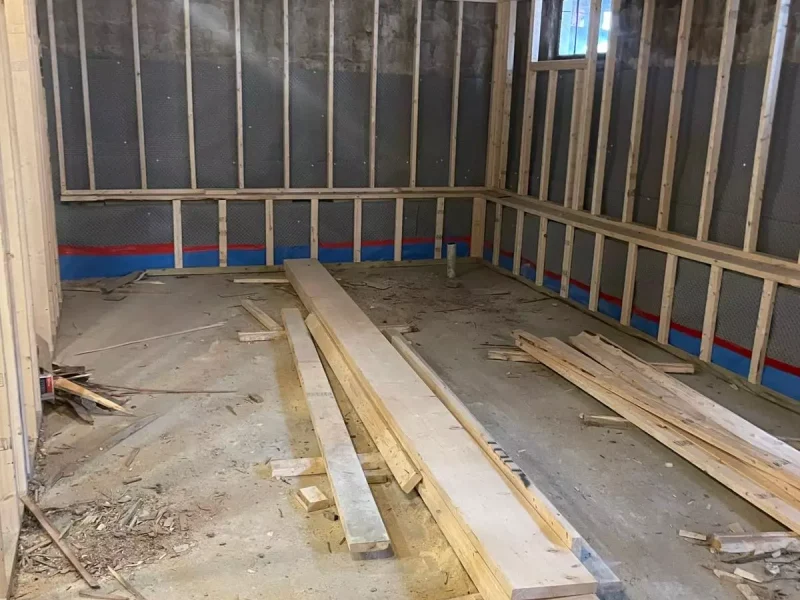
Building a new home in Massachusetts in 2026 is not the same as it was even five years ago. State energy standards have become more demanding, utility costs have climbed significantly, and homeowners are increasingly building with long-term efficiency — not just square footage — as a top priority.
For property owners in Cambridge, Boston, and the surrounding communities, these shifts present a real opportunity. A new home built to today’s efficiency standards can dramatically reduce monthly utility bills, qualify for thousands of dollars in rebates, and hold its value far longer than a home built to yesterday’s codes. Below, we break down the most important sustainable and energy-efficient new construction trends shaping Massachusetts in 2026.
Massachusetts has set a target of achieving a 95% reduction in greenhouse gas emissions below 1990 levels by 2050, with a 50% reduction milestone by 2030. New construction is one of the most direct pathways to meeting those goals, since newly built homes can be designed from the ground up to meet or exceed the highest efficiency standards. Mass.gov
This is not just environmental policy — it translates directly into lower operating costs for homeowners and stronger long-term asset values for new construction in the Boston metro area.
The Massachusetts Stretch Energy Code goes beyond the standard state building code, setting stricter requirements for insulation, HVAC systems, and renewable energy use. Communities that adopt the Stretch Code commit to higher energy performance standards for all new construction and significant renovations within their boundaries. 8TFive Studio
For homeowners building in Cambridge, Boston, and many surrounding municipalities, this means the baseline for new construction is already significantly more efficient than what was standard a decade ago. Working with a contractor who understands these requirements from the design phase forward is essential to avoiding costly corrections later.
There are currently over 23,000 multifamily units in the Mass Save new construction program pipeline meeting Passive House standards — the highest level of energy efficiency available. The Specialized Energy Code requiring Passive House standards for new multifamily housing has been adopted by 48 Massachusetts municipalities, covering roughly 30% of the state’s population. Mass.gov
For single-family new construction, Passive House certification is also gaining traction, particularly among homeowners who want to minimize heating and cooling costs over the long term. A Passive House is designed to maintain a comfortable indoor temperature with minimal mechanical heating or cooling by relying on superior insulation, airtight construction, and controlled ventilation.
One of the most significant shifts in new construction across Massachusetts is the widespread move away from fossil fuel heating systems toward all-electric heat pumps. Heat pumps provide both heating and cooling through a single system, and modern cold-climate models perform efficiently even during New England winters.
All net zero and net zero ready construction projects in Massachusetts use heat pumps to handle heating and cooling operations, made feasible by the low overall energy demand in ultra-efficient buildings. Builtenvironmentplus
Beyond performance, the financial case is strong. Mass Save currently offers rebates including a $30,000 Passive House incentive for qualifying single-family new construction, a $15,000 all-electric renovation rebate, and a $10,000 whole-home heat pump rebate for qualifying installations. Bluegreenbuildingconcepts
New construction in 2026 increasingly incorporates smart home systems that go beyond convenience and directly support energy efficiency. These include:
Building automation systems allow homeowners and facility managers to monitor and control multiple building functions through a centralized platform, and for Massachusetts properties facing rising utility costs, automation has become one of the most effective ways to improve building performance. Corpmech
Insulation and air sealing are not new concepts, but the standards for new construction in Massachusetts have advanced considerably. Modern high-performance builds prioritize:
These components work together as a system. A home with excellent insulation but poor air sealing still loses significant energy — and vice versa. Getting the full value of a high-performance build requires coordinating all of these elements from the design stage.
Materials used in construction have a measurable impact on a building’s overall environmental footprint. Recycled steel and sustainably sourced wood are among the most widely adopted low-carbon framing choices in 2026, and the industry continues to move toward materials that reduce embodied carbon without compromising structural performance. Sustainable Business Magazine
For Cambridge and Boston homeowners, this trend also connects to durability — materials selected for low environmental impact tend to perform better over the long term, reducing maintenance costs and extending the life of the structure.
New construction built to 2026 efficiency standards in Massachusetts is not simply greener — it is more financially resilient. Newly built homes come with brand-new mechanical systems that are less likely to fail, and they are built to the latest building code standards, making them more energy-efficient than older homes and typically less costly to insure. The Boston Globe
With energy costs continuing to rise across the region, the gap in monthly operating expenses between a high-performance new build and a standard existing home is growing every year. For anyone planning new construction in the Cambridge or Boston area, incorporating these efficiency measures from the start — rather than retrofitting later — is the most cost-effective path forward.
At JCL Construction, Inc., we build new homes and additions throughout Cambridge, Boston, and the Greater Boston area with a full understanding of Massachusetts energy codes, Mass Save incentive programs, and the construction practices that deliver real long-term performance. Our team helps clients navigate every step — from design and permitting through final inspection — with transparency and precision.
Contact us today for a free estimate on your new construction project.
📞 (781) 521-6395
📧 info@jclconstructioninc.com
From remodeling and new construction to painting and flooring, we deliver quality workmanship you can trust. Contact our team today for a free estimate and professional guidance for your next project.
Trust JCL Construction, Inc. to make your construction projects a reality. Contact us today and let us be your trusted partner on the road to transforming your space!