- (781) 521 - 6395
- info@jclconstructioninc.com
- jclconstruction.hours@gmail.com
- Mon - Fri: 7:00 - 17:00Saturdays by appointment
New England weather is hard on floors. Massachusetts homeowners deal with humid summers, dry heated winters, snow and salt tracked in from the street, and — in many Cambridge and Boston homes — older subfloors that were never built with modern moisture barriers in mind. Choosing the wrong material doesn’t just look bad after a few years; it can warp, buckle, or crack outright.
The right flooring choice depends on the room, the moisture exposure, and how much seasonal humidity swing the material can tolerate. Below, we break down the best flooring options for Massachusetts homes, room by room, with durability and climate performance in mind.
Massachusetts experiences real humidity swings between seasons — moist summers followed by dry, heated winters. Wood-based materials naturally expand when humidity rises and contract when the air dries out. Over time, that constant push and pull can cause gaps, cupping, or warping, especially in flooring that isn’t designed to handle the shift.
This doesn’t mean wood floors are off the table in Massachusetts. It means the type of wood-based flooring, and where it’s installed, makes all the difference.
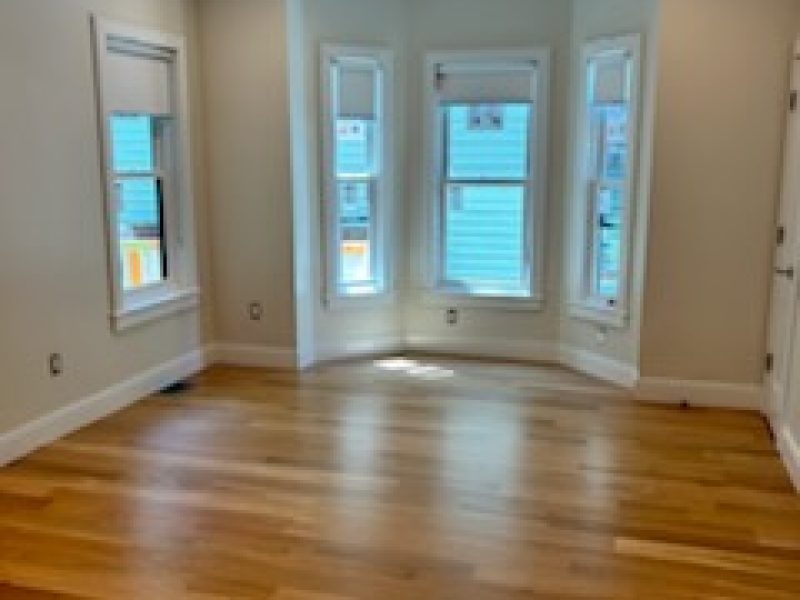
Solid hardwood remains one of the most desirable flooring options for its classic look, long lifespan, and resale value. In Massachusetts homes, hardwood performs best in climate-controlled living spaces — living rooms, bedrooms, and hallways — where humidity and temperature stay relatively stable year-round.
Why it works:
Where to avoid it: Solid hardwood is not recommended for kitchens, bathrooms, or basements, where humidity and the risk of standing water are highest. Seasonal humidity swings in these spaces can cause cupping or gapping over time.
For homeowners who want the warmth of real wood in spaces with slightly more humidity exposure, engineered hardwood is a smart middle ground. Its cross-layered plywood core resists the expansion and contraction that affects solid wood, making it far more dimensionally stable through New England’s seasonal shifts.
Best for: Kitchens, dining rooms, and homes with radiant heating, where solid hardwood would be too risky long-term.
Luxury vinyl plank has become one of the most popular flooring upgrades for Massachusetts homes, and for good reason. Modern LVP is fully waterproof, handles snow, salt, and slush tracked in during winter, and stands up to heavy foot traffic from kids and pets.
Why it works:
Best for: Kitchens, basements, mudrooms, and entryways — anywhere moisture, spills, or seasonal debris are a regular issue.
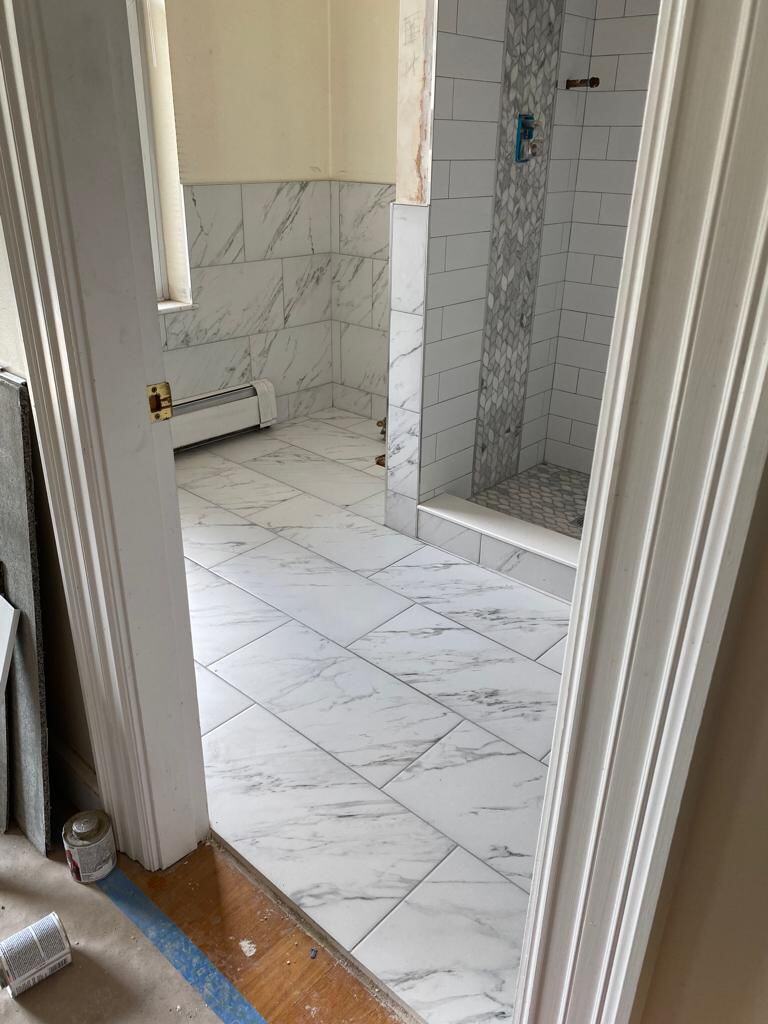
Tile remains one of the most moisture-proof flooring materials available, making it the top choice for bathrooms and high-moisture entry points. Porcelain tile in particular absorbs minimal water, resists scratching, and holds up well to the salt and sand New England winters bring inside.
Why it works:
Maintenance note: Grout lines need periodic sealing to prevent moisture intrusion and staining over time — a small upkeep step that protects the investment.
Laminate has improved significantly in recent years, with many water-resistant options now available. It offers a wood-look finish at a lower price point and installs quickly with click-lock systems. However, traditional laminate still contains a particleboard core that can swell if exposed to standing water for an extended period, so it’s best reserved for bedrooms, hallways, and other lower-moisture spaces rather than kitchens or bathrooms.
In many older Cambridge and Boston homes, the subfloor itself plays a bigger role in flooring performance than the finish material. Uneven, moisture-prone, or aging subfloors should be inspected and properly prepped before any new flooring is installed — skipping this step is one of the most common causes of premature flooring failure in older New England homes.
Choosing the right flooring is about more than style — it’s about matching the material to the room, the moisture exposure, and the way Massachusetts seasons stress a home over time. With over 17 years of experience serving Cambridge, Boston, and the surrounding communities, JCL Construction, Inc. helps homeowners select and install flooring that’s built to last through New England’s full range of weather.
Whether you’re renovating one room or your entire home, contact JCL Construction, Inc. today for a free estimate. Our team will help you choose flooring that fits your space, your budget, and our local climate.
From remodeling and new construction to painting and flooring, we deliver quality workmanship you can trust. Contact our team today for a free estimate and professional guidance for your next project.
Trust JCL Construction, Inc. to make your construction projects a reality. Contact us today and let us be your trusted partner on the road to transforming your space!