- (781) 521 - 6395
- info@jclconstructioninc.com
- jclconstruction.hours@gmail.com
- Mon - Fri: 7:00 - 17:00Saturdays by appointment
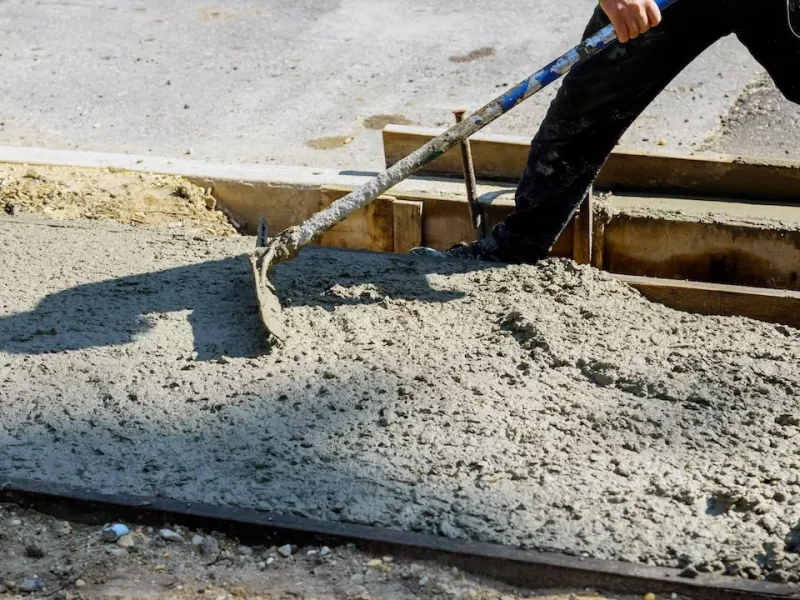
If you are planning a backyard patio in the Boston or Cambridge area, one of the first decisions you will face is the material: poured concrete or pavers. Both are popular, both are durable when properly installed, and both can significantly improve the livability and value of your outdoor space. But they perform differently in New England’s climate, carry different long-term maintenance requirements, and come with different upfront costs.
At JCL Construction, Inc., we have installed both concrete and paver patios throughout Cambridge, Boston, and the Greater Boston area. Here is an honest comparison to help you make the right choice for your backyard and your budget.
This is the most important factor for Boston-area homeowners, and it deserves to be addressed first.
Massachusetts winters subject outdoor surfaces to repeated freeze-thaw cycles, road salt tracked in from shoes and pets, and significant snowfall that often requires shoveling or snow blower use directly on the patio surface. Both materials can handle these conditions — but they respond differently.
Poured Concrete and Winter Conditions
Concrete is a single continuous slab, which means that when the ground beneath it shifts due to freezing and thawing, the slab has nowhere to flex. Over time, this can lead to cracking — particularly in areas where the subbase was not properly compacted or where drainage was not adequately addressed during installation. De-icing salts can also cause surface spalling on concrete if a sealer is not applied and maintained.
A professionally installed concrete patio with proper subbase preparation, control joints, and a quality sealer performs well through New England winters — but installation quality makes an enormous difference in how it holds up over the years.
Pavers and Winter Conditions
Pavers handle freeze-thaw cycles more naturally than poured concrete because the joints between individual units allow for minor independent movement. When the ground shifts slightly beneath a paver patio, the individual units can adjust without the cracking that affects a monolithic slab. If a section of the patio does settle unevenly over time, individual pavers can be lifted and releveled without replacing the entire surface.
The trade-off is that the polymeric sand or jointing material between pavers requires periodic maintenance and can wash out or degrade over time, requiring reapplication.
Poured Concrete
Poured concrete is generally the more affordable option upfront. The material itself is less expensive than pavers, and installation requires fewer labor hours for the same square footage. For homeowners working with a defined budget who want a clean, functional patio surface, concrete delivers strong value per square foot.
Decorative options — stamped concrete, exposed aggregate, or colored concrete — add cost but are still typically less expensive than comparable paver installations.
Pavers
Pavers carry a higher upfront cost due to the material price per unit and the additional labor required for precise installation. However, they offer more design flexibility — pattern, color, texture, and border options are nearly unlimited — and their repairability over the long term can offset some of the initial price difference.
A paver patio that needs spot repair twenty years from now can be addressed by lifting and replacing individual units. A cracked concrete slab typically requires more extensive patching or full section replacement, which can close the long-term cost gap between the two options.
Both materials are long-lasting when properly installed, but their failure modes differ.
Concrete is extremely strong in compression and, with control joints placed correctly during installation, manages cracking well over time. A well-installed concrete patio in the Boston area can last 25 to 50 years with proper sealing and maintenance. Surface cracks, when they do occur, can be filled — but large structural cracks or significant settling typically require more involved repair.
Pavers are individually very strong and their modular nature makes them inherently more resilient to the ground movement that causes concrete to crack. A paver patio installed on a properly prepared and compacted subbase can last 30 to 50 years or more. The surface itself rarely fails — most paver issues over time relate to settling, edge restraint failure, or joint material degradation, all of which are repairable without replacing the entire installation.
Concrete requires periodic sealing — typically every two to three years — to protect the surface from moisture penetration, de-icing salt damage, and staining. Sealing is a straightforward maintenance task that significantly extends the life and appearance of the surface. Surface stains from leaves, rust, or oil are more visible on concrete and can be harder to remove than on textured paver surfaces.
Pavers require occasional joint sand replenishment, particularly after heavy rain seasons, and periodic re-sealing if a sealer was applied at installation. Weeds can occasionally grow through paver joints if polymeric sand breaks down — a manageable issue but one that requires attention. Individual pavers that crack or stain can be replaced without disturbing the rest of the surface.
Concrete offers a clean, contemporary look that complements modern home exteriors well. Stamped concrete can replicate the appearance of stone, slate, or brick at a lower cost than the real materials. Color can be added during the pour or applied as a topical stain after curing. The finished look is seamless and uniform.
Pavers offer significantly more design flexibility — running bond, herringbone, basketweave, and circular patterns are all achievable, and mixing colors, sizes, and textures allows for truly custom results. For homeowners who want an outdoor space that makes a strong visual statement, pavers generally offer more creative range.
Use this as a general guide:
Choose concrete if:
Choose pavers if:
Both concrete and paver patios are excellent choices when designed and installed correctly for the conditions of a specific backyard. The subbase preparation, drainage planning, and installation quality matter as much as the material itself — and in the Boston area, where freeze-thaw cycles test every outdoor surface, getting these details right from the start determines how the patio performs for decades.
At JCL Construction, Inc., our team helps Cambridge and Boston homeowners select the right patio material for their space, their budget, and their long-term goals — and installs it to a standard built to last through New England winters.
Contact us today for a free estimate on your backyard patio project.
📞 (781) 521-6395
📧 info@jclconstructioninc.com
From remodeling and new construction to painting and flooring, we deliver quality workmanship you can trust. Contact our team today for a free estimate and professional guidance for your next project.
Trust JCL Construction, Inc. to make your construction projects a reality. Contact us today and let us be your trusted partner on the road to transforming your space!

