- (781) 521 - 6395
- info@jclconstructioninc.com
- jclconstruction.hours@gmail.com
- Mon - Fri: 7:00 - 17:00Saturdays by appointment
Hardwood floors are one of the best features an older
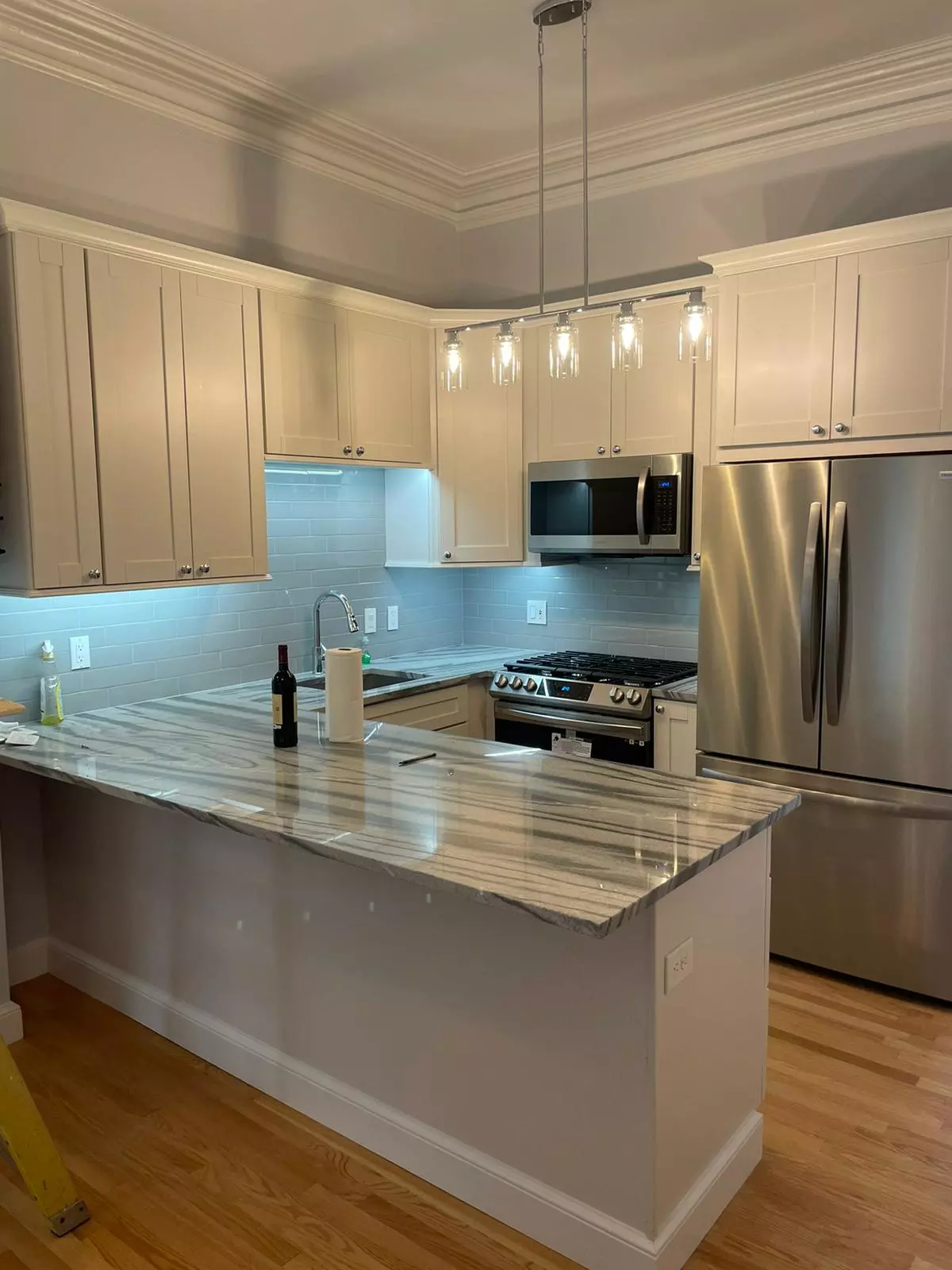
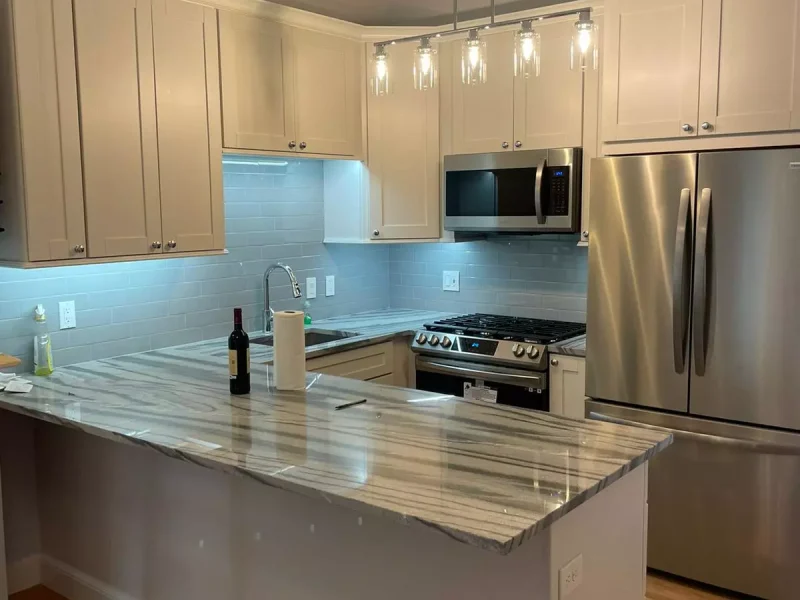
Most kitchen countertops are chosen to blend in. A statement stone does the opposite. A slab with bold gray veining, sweeping movement, or deep contrast becomes the focal point of the whole room, and it can make a simple kitchen with white cabinets and a plain backsplash feel custom.
For homeowners in Cambridge and Boston, natural stone is also a good fit for older homes, where character and craftsmanship matter. But quartzite, marble, and granite behave very differently in daily use. This guide explains how the three compare, how to choose a slab, and what a good installation involves. At JCL Construction, Inc., we install countertops as part of kitchen remodels throughout Greater Boston, and the decisions below are the ones we walk clients through before any stone is ordered.
A statement stone is defined by its pattern, not its material. Look for:
Because every natural slab is different, two countertops sold under the same name can look quite different. That’s part of the appeal, and it’s also why choosing the actual slab matters so much (more on that below).
Quartzite is a natural stone formed when sandstone is transformed by heat and pressure. Many varieties have flowing veining that resembles marble but with a tougher surface.
Strengths
Things to know
Best for: Homeowners who want marble-like drama with better durability, and who use the kitchen heavily.
Marble has been used in Boston-area homes for generations, and few materials match its look. Bold gray-veined marble is a classic choice for statement surfaces.
Strengths
Things to know
Best for: Homeowners who love the look and are comfortable with a surface that will show life over the years. It’s also a good choice for lower-use areas like bars, bathrooms, and baking stations.
Granite has a reputation for sparkly speckled patterns, but the range has grown. Many granites now offer dramatic veining and movement that rival marble and quartzite, including honed and leathered finishes that look more contemporary.
Strengths
Things to know
Best for: Busy family kitchens where durability is the top priority.
Here is how the three stones stack up on the points that matter most in daily use. These are general characteristics, and individual stones vary, so ask the fabricator about the specific slab you’re considering.
The stone industry’s naming isn’t always consistent. Some stones sold as quartzite are actually softer stones, such as dolomitic marble, that look like quartzite but can etch and behave more like marble.
A simple test helps. Ask the supplier to put a drop of lemon juice or a mild acid on a sample or offcut. Real, hard quartzite typically shows no reaction, while softer stone may dull. Don’t do this on a slab you plan to buy. Use a sample or ask the stone yard to demonstrate. A reputable supplier will help you with this.
Visit the stone yard. Sample squares and online photos can’t show the full pattern. Seeing the actual slab is the only way to know how the veining will look across your counters.
View it in good light. Look at the stone near a window as well as under artificial light. Veining and color can shift noticeably.
Think about layout. A fabricator can position templates over the slab so the best veining falls where you want it, such as the main run or the peninsula. Ask to approve the layout before cutting.
Consider bookmatching. When two adjacent slabs are cut from the same block and opened like a book, the veining mirrors across the seam. This works especially well on waterfall edges and backsplashes.
Match the stone to the kitchen. A bold stone usually works best when the rest of the room stays calm: simple cabinets, a quiet backsplash, and limited competing patterns. This is especially true for a kitchen island or peninsula, where a waterfall edge or a two-tone design puts the stone on full display.
Natural stone is durable, but it isn’t maintenance-free.
Stone is heavy, and the details of installation affect how it looks and lasts.
Templating: After cabinets are installed, the fabricator takes precise measurements. In older Cambridge and Boston homes, walls and floors are rarely perfectly square, so accurate templating is essential.
Cabinet support: Cabinets need to be level and strong enough to carry the stone. Sink cutouts and long overhangs, like peninsula seating, may need additional support.
Seams: Seams are normal on longer runs. Good fabricators place them in discreet locations and match the veining as closely as possible.
Access: Slabs are large and heavy. In brownstones, triple-deckers, and condos, getting stone up stairs or through tight entries needs advance planning.
Plumbing and electrical: Faucets, sinks, and cooktops are coordinated around the stone, usually after the counter is set.
Lead times: Fabrication takes time, and imported or specialty slabs can take longer. Build this into your schedule early, since material lead times are one of the biggest factors in your overall kitchen renovation timeline.
If you’re still unsure, a contractor or fabricator can show you actual samples next to your cabinets and flooring, which is more helpful than any chart.
A dramatic stone countertop can anchor an entire kitchen, but the result depends on choosing the right stone and installing it carefully. At JCL Construction, Inc., we help Cambridge and Boston homeowners plan the full kitchen, from cabinets and lighting to countertops and finishes, so every element works together. Whether you’re planning a small kitchen remodel or a full renovation, the right stone makes a lasting difference.
Contact us today for a free estimate on your kitchen remodel.
📞 (781) 521-6395
📧 info@jclconstructioninc.com
From remodeling and new construction to painting and flooring, we deliver quality workmanship you can trust. Contact our team today for a free estimate and professional guidance for your next project.
Trust JCL Construction, Inc. to make your construction projects a reality. Contact us today and let us be your trusted partner on the road to transforming your space!