- (781) 521 - 6395
- info@jclconstructioninc.com
- jclconstruction.hours@gmail.com
- Mon - Fri: 7:00 - 17:00Saturdays by appointment
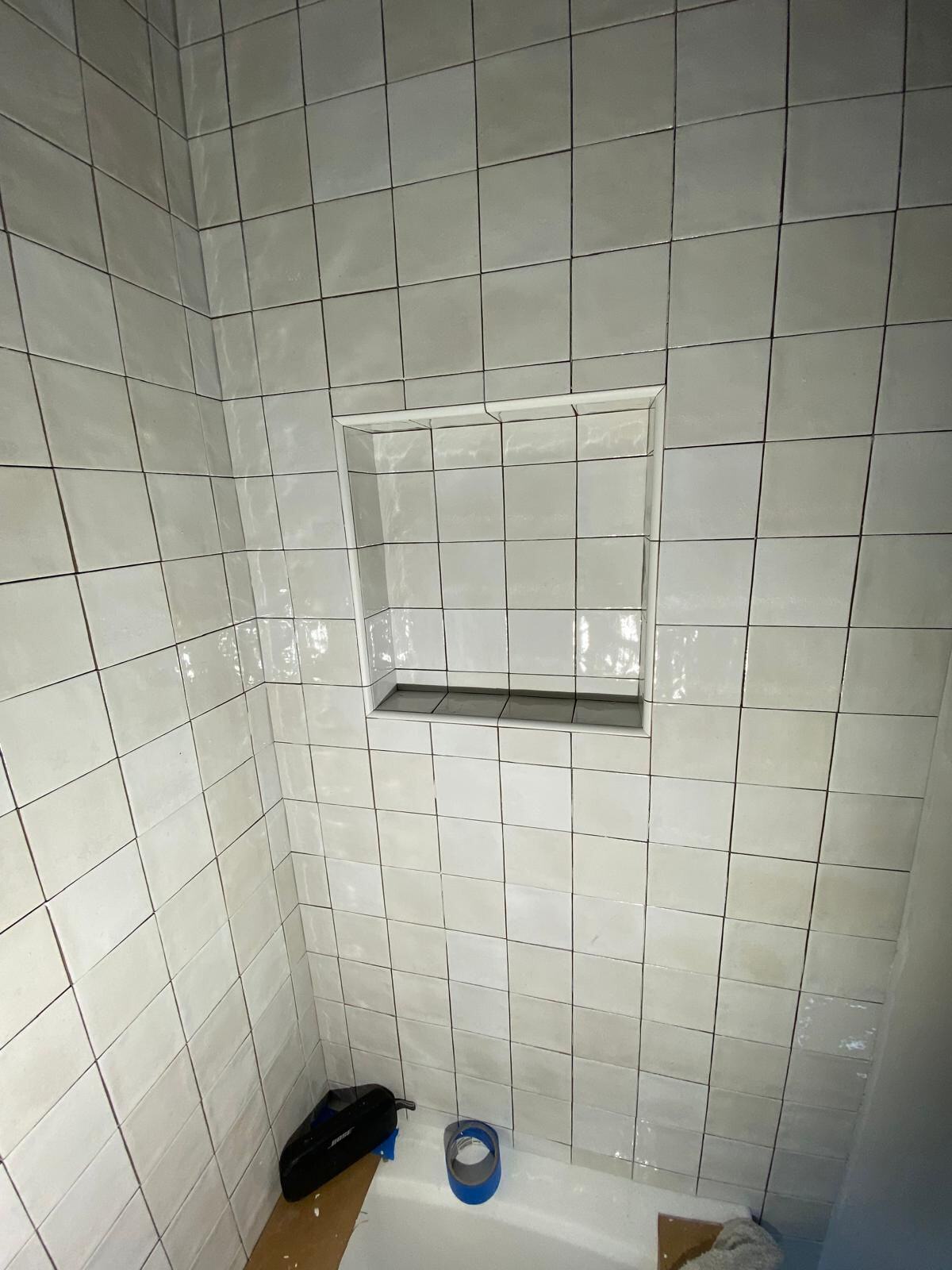
When homeowners plan a bathroom remodel in Cambridge or Boston, most of the early conversations focus on what can be seen — tile selection, fixture finishes, glass enclosures, and layout. These details matter, and they are what make a finished bathroom beautiful. But the single most important decision in any shower renovation is one that will be completely invisible once the tile is set: the waterproofing system installed beneath the surface.
A shower that looks stunning on day one but was not properly waterproofed will begin failing within a few years. Water that penetrates tile grout — and it always does eventually — will reach the substrate beneath. If that substrate is not fully waterproofed, moisture works its way into the wall framing, subfloor, and surrounding structure. The result is rot, mold, and structural damage that often goes undetected until it requires tearing out the entire shower and repairing the damaged framing behind it.
At JCL Construction, Inc., proper waterproofing is not an optional upgrade — it is the foundation of every shower and bathroom remodel we complete throughout Cambridge, Boston, and the Greater Boston area. Here is what homeowners should understand before any tile goes up.
One of the most persistent misconceptions in bathroom remodeling is that tile itself is waterproof. Ceramic and porcelain tile are highly water-resistant, but the grout joints between them are not. Over time — and the timeline varies based on grout quality, cleaning products used, and humidity levels — grout becomes permeable and allows water to pass through to the substrate below.
In Massachusetts bathrooms, where showers are used daily through humid summers and dry heated winters, the grout is subjected to constant expansion, contraction, and thermal cycling that accelerates this process. The waterproofing system beneath the tile is what protects the structure when — not if — water eventually gets through.
This is why the quality of the waterproofing installation matters as much as the tile work visible on the surface. A beautifully tiled shower built on an inadequate waterproofing system is a liability. A properly waterproofed shower is an investment that protects the home’s structure for the life of the tile installation.
Among the waterproofing systems used in professional bathroom remodeling, the Schluter KERDI system has become one of the most trusted and widely specified in the industry — and it is the system JCL Construction uses on shower installations throughout Cambridge and Boston.
The KERDI system consists of two primary components that work together to create a fully bonded, continuous waterproof assembly:
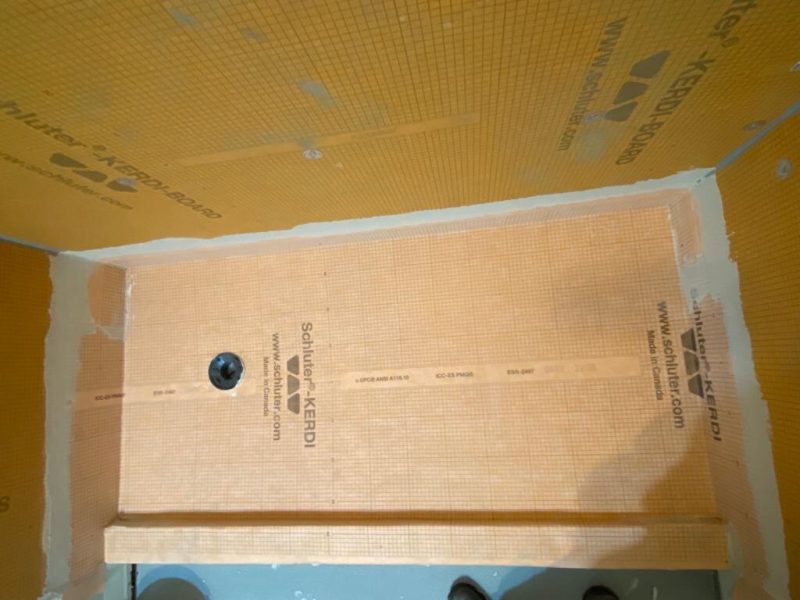
KERDI-BOARD
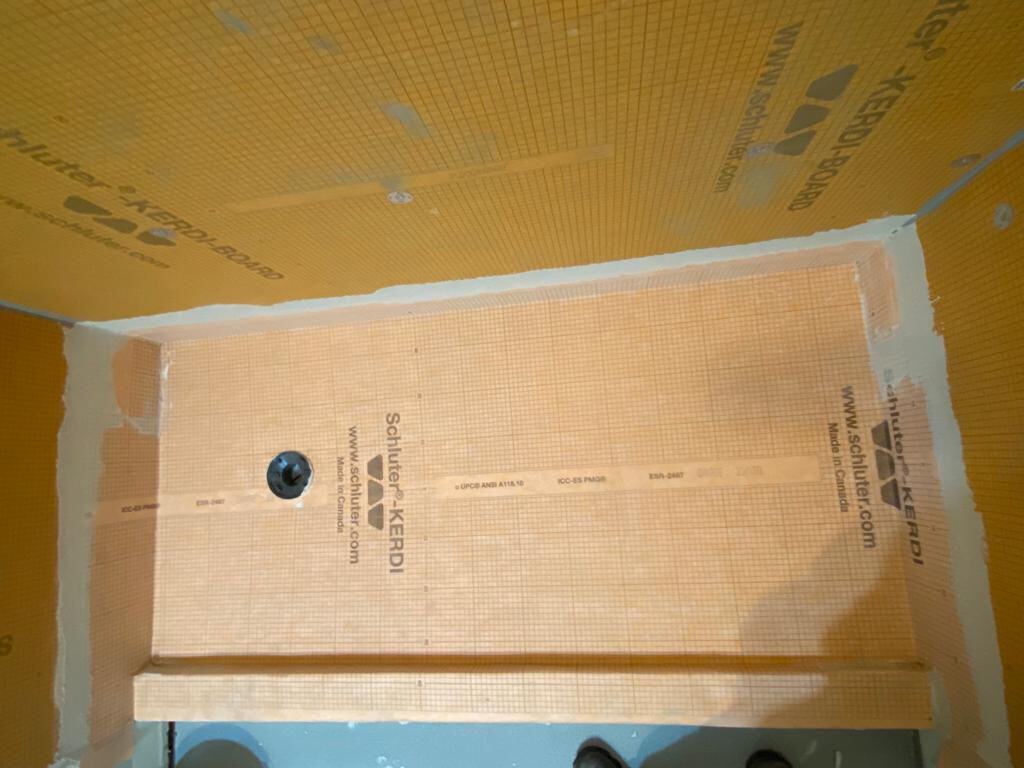
KERDI-BOARD is a rigid, lightweight foam panel that serves as both the substrate and the waterproofing layer for shower walls and ceilings. Unlike standard cement backer board, which is water-resistant but not waterproof, KERDI-BOARD creates a fully waterproof surface that tile adheres directly to. Its lightweight construction makes it easier to handle in the tight confines of a shower enclosure, and its rigid structure provides a flat, stable substrate that supports precise tile installation.
KERDI-BOARD is installed on all shower walls and the ceiling of the enclosure, creating a continuous waterproof envelope around the entire space. Seams between panels are sealed with KERDI-BAND — a fabric membrane embedded in thinset — to ensure no gaps exist in the waterproofing layer at joints or transitions.
KERDI Shower Pan
The KERDI shower pan — sometimes called the KERDI shower tray — is a pre-sloped foam base that replaces the traditional mortar bed method of building a shower floor. It arrives with the correct slope already built in, directing water toward the drain from all sides, and its surface is covered with KERDI membrane ready for direct tile application.
The pre-sloped design eliminates one of the most common failure points in traditional shower construction — inconsistent or inadequate slope in a hand-formed mortar bed — and ensures water drains efficiently rather than pooling on the shower floor. The foam core is fully waterproof, and the integrated KERDI surface means the floor waterproofing and the wall waterproofing connect seamlessly at the perimeter.
Even with a high-quality waterproofing system, the details of installation determine whether the system actually performs as intended. The areas most vulnerable to waterproofing failure are the transitions and changes in plane — exactly the spots where water pressure is highest and where cutting corners during installation is easiest to hide.
The consequences of inadequate shower waterproofing are not immediate — they develop over time, which is part of what makes this failure mode so costly. A shower with poor waterproofing may look and function perfectly for two to five years before signs of moisture damage begin to appear.
Common indicators that waterproofing has failed include:
By the time these signs appear, the damage behind the tile is typically significant. Remediation almost always requires removing all tile, replacing the waterproofing system, and repairing or replacing compromised framing and subfloor — a project that costs several times more than getting the waterproofing right during the original installation.
For homeowners in Cambridge and Boston planning a bathroom remodel with a walk-in shower, these are the questions that matter most before construction begins:
Any contractor can install tile. The craftsmanship that determines whether a shower performs correctly for twenty years is almost entirely invisible by the time the bathroom remodel is complete. It lives in the waterproofing membrane, the corner transitions, the drain connection, and the substrate preparation — work that happens before a single tile is set and is never seen again once the job is done.
At JCL Construction, Inc., we use the Schluter KERDI system on shower installations throughout Cambridge, Boston, and the Greater Boston area because it is one of the most reliable and well-documented waterproofing assemblies available — and because our clients deserve a bathroom that performs as well as it looks, for as long as they live in their home.
Contact us today for a free estimate on your bathroom remodel.
📞 (781) 521-6395
📧 info@jclconstructioninc.com
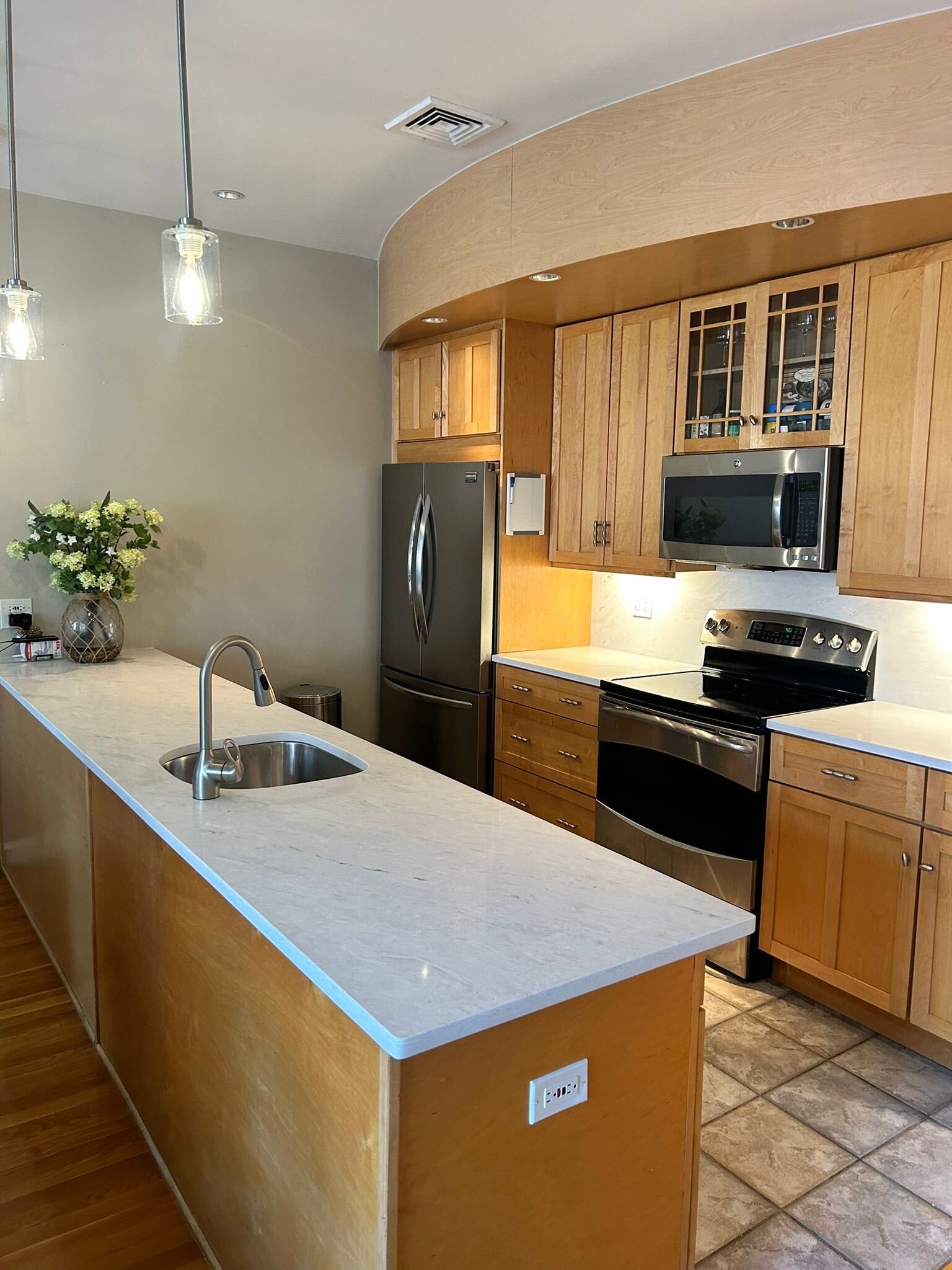
From remodeling and new construction to painting and flooring, we deliver quality workmanship you can trust. Contact our team today for a free estimate and professional guidance for your next project.
Trust JCL Construction, Inc. to make your construction projects a reality. Contact us today and let us be your trusted partner on the road to transforming your space!

